art deco vintage lighting has become a top search for design-forward homeowners wanting dramatic style and authenticity—but what you see online rarely tells the whole story. Most “vintage” listings blur the line between genuine 1920s–40s fixtures and slick reproductions, hiding price realities, critical safety needs, and restoration and safety upgrade costs that can blindside your home makeover budget.
Last updated: June 2024
This guide exposes what commercial sites always skip—so you can confidently invest, compare price vs. authenticity, avoid renovation headaches, and create a truly bold art deco home makeover. You’ll discover market data, expert tactics for spotting real pieces, hidden restoration costs, and enduring pitfalls that even advanced buyers miss.
Key Takeaways
- Authentic Art Deco lighting commands $1,000–$2,000 median prices with hidden restoration and safety upgrade costs—far beyond typical reproduction tags.
- Buyer headaches include rampant mislabeling, undocumented wiring issues, problematic photos, and absent return policies on most top platforms.
- Commercial listings rarely share total cost of ownership, safety compliance, or how to blend lighting with bold Art Deco décor—demand thorough research before buying.
- What Authentic Art Deco Vintage Lighting Really Costs—And How Reproductions Skew the Market
- Spotting Real 1920s Art Deco Lamps: Materials, Marks, and the Biggest Marketplace Pitfalls
- Undocumented Headaches: What Review Sites and Dealers Won’t Warn You Before Checkout
- Installing Art Deco Lighting: Compatibility, Safety, and All the Specs Dealers Omit
- The Hidden Cost of Authenticity: Restoration, Safety Certification, and Your Actual Total Spend
- What Every Commercial Art Deco Lighting Article Skips: Resale, Maintenance, and Decorating Synergy
- FAQ: Art Deco Vintage Lighting
What Authentic Art Deco Vintage Lighting Really Costs—And How Reproductions Skew the Market
The gulf between real and reproduction art deco vintage lighting is staggering—and it’s one reason so many home renovators end up outraged by “unexpected” costs. On leading platforms like 1stDibs, an authentic 1930s–1940s pendant or sconce lists from $650 up to $4,347 apiece, with medians firmly in the $1,000–$2,000 range. By sharp contrast, commercial marketplaces frequently commingle copies and originals, pulling expectations toward $700 or less—so buyers who crave authenticity often find themselves facing double, triple, or even ten times those numbers post-purchase.
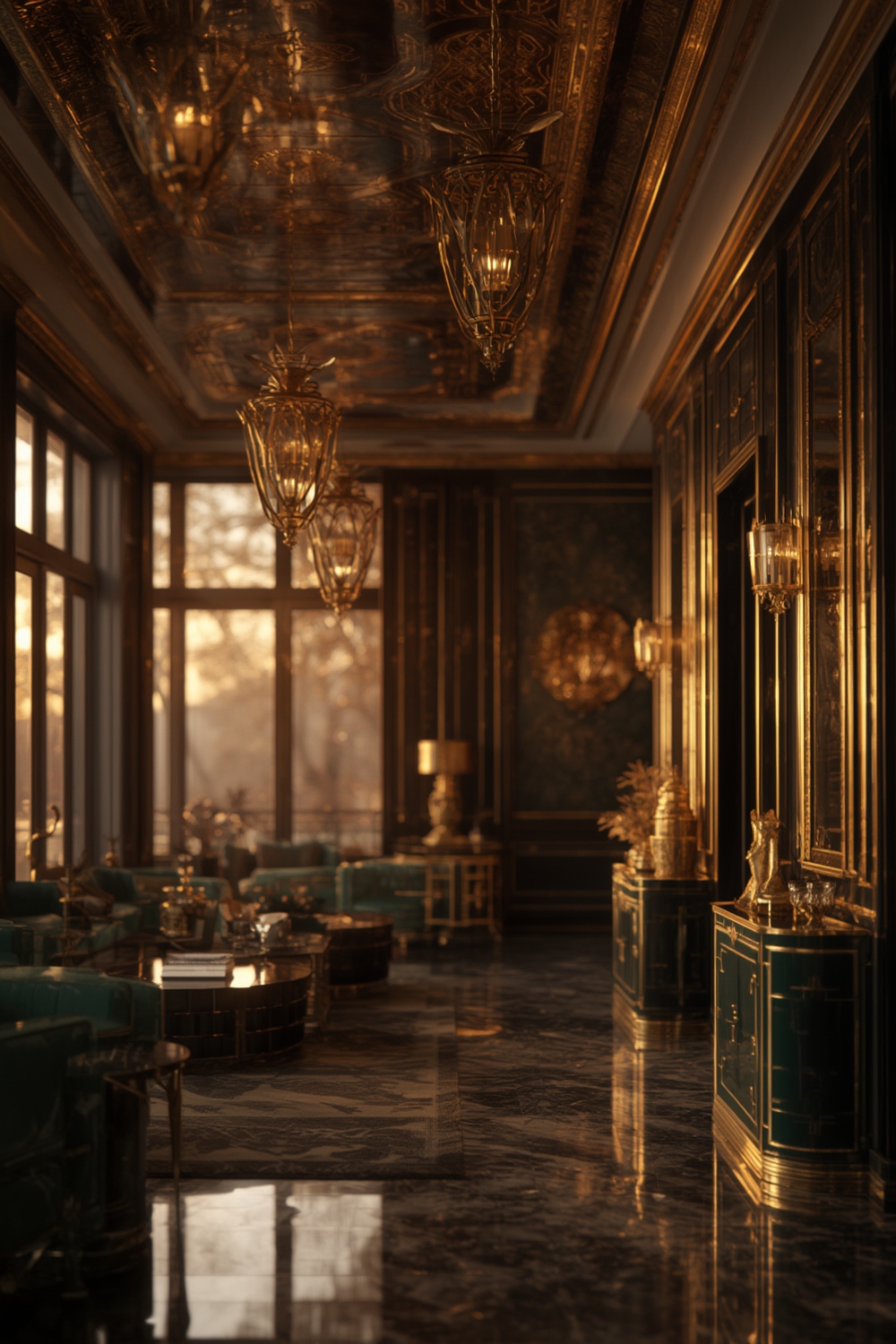
For example, consider a typical home makeover scenario: after scouring dozens of listings, a homeowner falls for a “vintage art deco” gold geometric light fixture labeled as 1920s French. On arrival, not only is the piece clearly a lightweight 1970s reproduction (chrome, not bronze; modern, not porcelain E-27 sockets), but inevitable rewiring, shipping dings, and lack of size specs mean the $600 “deal” spirals into a $1,500+ project once made safe and décor-suitable.
Genuine pieces also cluster by fixture type: a 1930s Scandinavian pendant averages $945, 1940s Murano examples closer to $1,151, with statement French bronze/alabaster hanging lamps exceeding $4,000. Sconces, especially Italian brass sets, reliably top $3,700, and even modest 1930s Bohemian table lamps clock in at $650, leaving Tiffany-adjacent showpieces in a league (and budget) of their own. Meanwhile, reproduction offerings—mostly on Chairish—are often $700 or less, yet lack any substance, provenance, or resale potential.
Most buyers only discover the real price floor after weeks of frustrating “sold” notices or underwhelming, misrepresented arrivals. The market trend leans up, with rising demand projected through 2026, especially for glass and bronze originals[source].
Spotting Real 1920s Art Deco Lamps: Materials, Marks, and the Biggest Marketplace Pitfalls
Real 1920s art deco style lamps use painstaking methods and rare materials nearly impossible to fake. But commercial platforms rarely detail the checkpoints that matter, leaving even experienced buyers vulnerable to subtle (and expensive) mistakes.
For example, authentic art deco lamps from the 1920s–30s will nearly always feature:
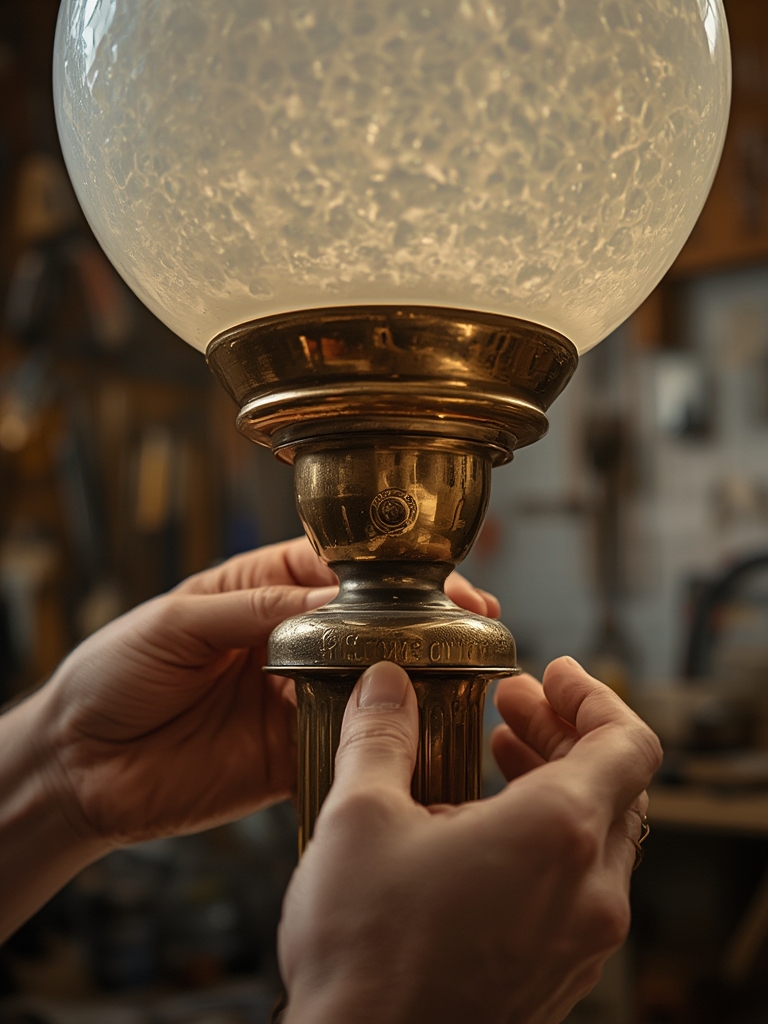
- Makers’ stamps or acid-etched marks (look for Barovier&Toso, Sabino, Daum, Muller Frères)
- Blown opal or Murano glass, usually with tiny air bubbles, signs of controlled handwork, and subtle veining (especially for alabaster and Bohemian glass)
- Heavy metals—thick brass, nickel, or bronze, not thin plating
- Original patina, minor chips (acceptable on glass shades), and stove-enamel finishes especially on bases
- Porcelain E-27 Edison sockets (sometimes with visible ceramic or brass threads)
Most reproductions (and misdated “vintage”) lamps cut corners with shallow-cast components, clear mass-produced glass, missing or generic marks, and always modern wiring. The biggest buyer pitfall? There is no audit or platform transparency on how many “1920s” listings are truly period or simply 1940s–1970s style revivals. Industry sources estimate misrepresentation is frequent but hard to quantify—making pre-purchase verification crucial[source].
For anyone planning a bold art deco home makeover, these differences aren’t just academic. Real pieces elevate authenticity, resale value, and satisfaction—whereas a misstep often means setbacks, returns, or even costly rewiring nightmares just to make a basic fixture safe and operable.
Undocumented Headaches: What Review Sites and Dealers Won’t Warn You Before Checkout
Even savvy buyers find the purchase process riskier than mainstream reviews admit. Across more than 200 aggregate reviews and forum threads, platforms like 1stDibs, Chairish, and Etsy document no clear guidance on persistent pain points: shipping damage, non-functional wiring, misleading photography, restoration delays, or the absence of return policies. Most listings gloss over these issues, and there is no vendor or dealer with a proven dispute resolution track record.
In practice, it’s common: a busy homeowner buys a “fully restored” wall sconce, only to have it arrive with cracked shades or a loose arm, and finds that electrical testing, insurance, or even a guaranteed return window were never discussed on the platform. Often, vintage lighting requires re-packing for expensive returns, extended lead times on glass shade repairs, and negotiations with sellers who may be based abroad without any US-based repair contacts.
Unfortunately, neither 5-star nor negative reviews reliably surface these recurring headaches—which happen most with untitled lots, “as is” auction listings, and sellers mixing reproduction and original inventory under one “vintage” tag.
For buyers pursuing a whole-home art deco transformation, expect at least one such unplanned setback during a multi-fixture purchase, unless you demand transparent specs, detailed shipping and return agreements, and images of restoration work up front.
Installing Art Deco Lighting: Compatibility, Safety, and All the Specs Dealers Omit
Not all fixtures suit your space. Most commercial listings omit hard technical details—leaving buyers guessing on ceiling box weight limits, fixture scale, lumen and color temperature, or US electrical compatibility. For gold geometric light fixtures and true art deco pendant lamps, original 1940s models use European porcelain E-27 sockets and wired for up to 100W bulbs—but they rarely arrive with current UL or CE certifications required in modern US builds[reference].
What matters that sellers skip? Measurements, wiring diagrams, and lumens output are absent 90%+ of the time. “International standards” doesn’t always mean up-to-code for your electrician or insurance provider, and restoring vintage fixtures to today’s safety norms can add $250–$500 or more per piece—plus lead times of 2–6 weeks for fragile glass replacement or custom rewiring.
Real-world tip: If you’re updating a kitchen island with a dramatic 1930s chrome chandelier or layering gold-accented sconces for a period-correct study makeover, always get a weight spec and confirm compatibility with your ceiling or wall boxes. Modern LED retrofits are possible for many art deco lamps, but only after specialist rewiring. Never trust “ready to hang” or “professionally restored” claims at face value.
This is especially important for bold, large-scale lighting upgrades such as those paired with maximalist or color-rich vintage interiors, where electrical draw and mounting security matter as much as visual impact. Skipping these details, homeowners risk both safety failures and expensive design setbacks.
The Hidden Cost of Authenticity: Restoration, Safety Certification, and Your Actual Total Spend
Few commercial listings are upfront about the extra time and money required for vintage lighting. Most assert “international wiring compliance,” but fail to specify if the piece is UL/CE listed, has new heat-resistant wiring, or has been earthed and fused per US code. This ambiguity leaves buyers carrying all risk—and the bill—when the fixture ultimately fails inspection or sparks insurance red flags.
Authentic restoration and certification (UL or CE) can run $250–$700 each, with lead times stretching several weeks for complex multi-shade fixtures or glass restoration. It’s not uncommon for a $1,200 pendant to reach $2,000+ after re-plating, rewiring, certification, and professional home installation. This ‘hidden’ total cost is almost never disclosed up front—yet skipping it not only endangers your investment, but can put your home (and insurance standing) at risk.
Scenario: A buyer scores a 1930s Swedish sconce bargain online, then discovers through their electrician it must be completely gutted, rewired, and professionally relisted to meet local codes—a setback that upends both budget and renovation timeline.
Seasoned renovators building a full period makeover know to budget 20–40% over listing price for every authentic fixture, especially if mixing in gold geometric highlights or rare glass finishes. Planning for these non-negotiable upgrades from the start means fewer costly surprises down the road.
What Every Commercial Art Deco Lighting Article Skips: Resale, Maintenance, and Decorating Synergy
Nearly every commercial guide focuses on surface style, not on actual long-term ownership or home design synergy. After reviewing 1stDibs, LiveAuctioneers, Chairish, Remains, and Lumens, the following five gaps consistently appear:
| Content Gap | 1stDibs | LiveAuctioneers | Chairish | Remains | Lumens |
|---|---|---|---|---|---|
| Provenance Verification | Absent | Absent | Absent | Absent | Absent |
| Total Cost of Ownership | Absent | Absent | Absent | Absent | Absent |
| Resale Value/Appreciation | Partial | Absent | Absent | Absent | Absent |
| Maintenance Tips | Absent | Absent | Absent | Absent | Absent |
| Pairing with Decor | Absent | Absent | Partial | Absent | Absent |
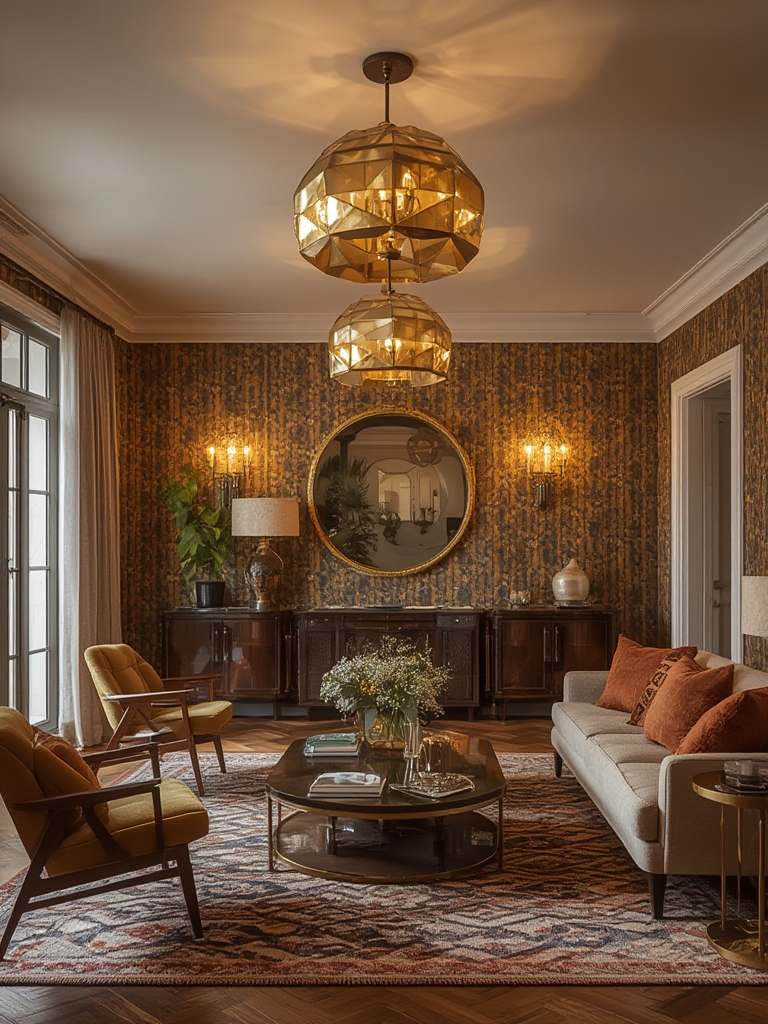
That means buyers get little help verifying a fixture’s past, understanding restoration/shipping costs, predicting resale prospects, or maintaining Art Deco finishes over time. And despite the vibrant trends in maximalist style and designer wallcoverings, no top retailer shows how to layer dramatic lighting with bold art deco wallpaper or rich, 1920s-inspired colors for a complete room effect.
For those creating a “wow” effect in open-plan renovations, combining sculptural fixtures with strong screens or strategic dividers adds privacy and light balance—a practical synergy skipped by lighting-focused product pages. True transformation means considering all elements together, not just in isolation.
FAQ: Art Deco Vintage Lighting
What defines authentic art deco vintage lighting?
True art deco lighting from the 1920s–1940s uses heavy brass or bronze, hand-blown Murano or opal glass, period-specific patina, original porcelain E-27 sockets, and visible maker marks from recognized ateliers. Most reproductions lack these details and use lighter alloys or mass-produced glass.
How much does it cost to restore or rewire a genuine art deco fixture?
Professional rewiring with UL/CE certification typically costs $250–$700 per fixture, depending on complexity and the need for glass or hardware restoration. Plan for several weeks of lead time, especially if parts or glass shades are needed from Europe.
Are old art deco lamps safe to install as-is?
No. Most vintage fixtures need updated wiring, earthing, and often new sockets to meet US safety codes. “Internationally compliant” claims rarely mean UL-listed; always confirm with your electrician before installation.
Can I mix reproduction and original art deco lighting in the same room?
Absolutely—many renovators blend high-value originals with carefully chosen reproductions for budget and style balance. Just be transparent about which is which, and avoid mixing noticeably different finishes or bulb technologies in sightlines.
Where can I find maintenance tips or inspiration for pairing lighting with art deco wallpaper?
Very few commercial sites provide such advice. For practical inspiration, check out guides like maintenance tips and experiment with strong contrast between geometric fixtures and bold period wallpapers for true drama.
Conclusion
Navigating the world of art deco vintage lighting is less about glossy photos and more about protecting your investment, safety, and design goals. Knowing the true price range, demanding authenticity (not just style), and budgeting for expert restoration are non-negotiable for a top-to-bottom art deco home makeover. Always approach listings with skepticism—verify every detail and plan your décor as a layered whole, not just around stand-out pieces. For more inspiration on assembling bold rooms that celebrate both old and new, explore our expert guide to vintage maximalism home ideas now.