Japandi living room decor is everywhere in 2025’s design headlines, but if you’ve actually tried to translate those breezy Pinterest boards into your own crowded, budget-conscious real-life space, you know it’s anything but simple. The advice is vague, sourcing is confusing, and prices swing wildly—leaving many mid-experience homeowners and renters wondering: Is this look actually attainable, or just another empty trend cycle?
Last updated: June 2024
This post cuts through the noise with specifics: what’s really driving the 2025 Japandi decor trend, the real-world headaches no one mentions, and practical steps for turning minimalist inspiration into a livable, sustainable, and stylish living room—even with limited space and a realistic budget.
Key Takeaways
- Most Japandi guides overlook actionable details—true implementation requires specific choices in layout, materials, and sourcing, not just “neutral palettes.”
- The main pain points are unexpected: furniture availability, balancing cost with quality, and sizing for small spaces are far trickier than Instagram suggests.
- Practical strategies involve vetting materials, understanding the realities of online furniture shopping, and small-space hacks most influencers don’t cover.
- The 2025 Japandi Living Room Decor Trend — Real Momentum or Just Hype?
- What No One Tells You: Top Consumer Struggles With Japandi Style Living Rooms
- The Missing Manual: Why Most Japandi Guides Fail on Practical Details
- Cost, Materials, and Sustainability — How to Vet Modern Japandi Furniture in 2025
- The Practical Side: Layout Rules and Small-Space Solutions for Japandi Minimalism Homes
- What’s Actually New for Japandi in 2025: Materials, Colors, and Craft
- Buying Japandi Online: Surprising Barriers Nobody Warns You About
- Frequently Asked Questions
The 2025 Japandi Living Room Decor Trend — Real Momentum or Just Hype?
Japandi isn’t just a buzzword—it’s a fusion of Japanese minimalism and Scandinavian comfort, projected by several industry watchers to define living rooms in 2025. But here’s the twist: despite articles touting its “rise,” there’s no hard proof—no concrete Google Trends surges, no released sales figures, and no viral hashtag stats behind this so-called breakout. It’s an expert-predicted trend, not a data-driven one.
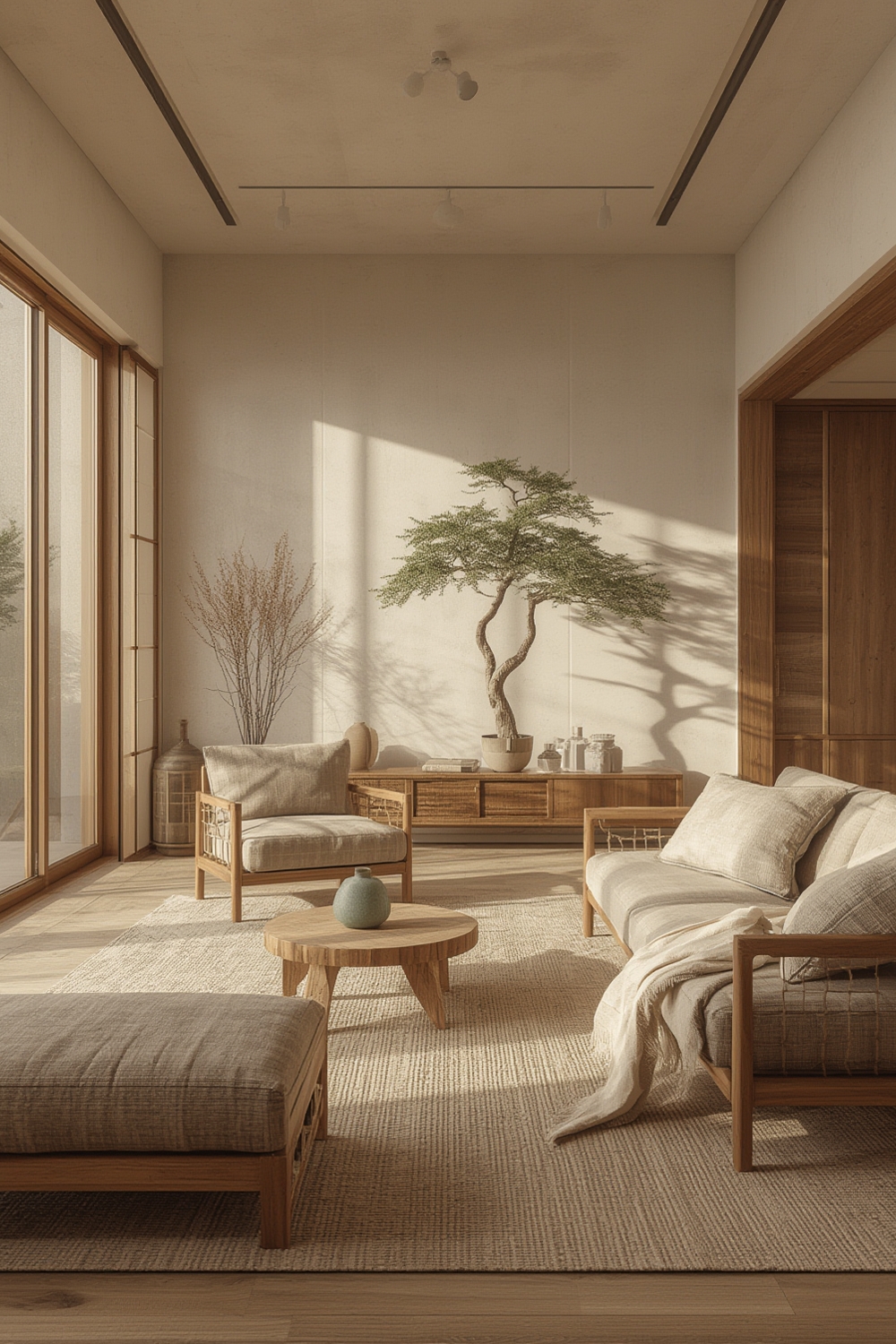
For example, if you’ve scrolled through Reddit or tried to find “2025 Japandi furniture” in big-box stores, you’ll likely come up short. The reality? Most real homes still wrestle with balancing serenity and warmth, minimalism and comfort, with little roadmap beyond dreamy photos. This disconnect leaves people frustrated, wondering if the movement is all surface and no substance. Peakere.com and BigWallDecor position Japandi as a key trend, but actionable evidence remains scarce.
What No One Tells You: Top Consumer Struggles With Japandi Style Living Rooms
If you’ve attempted a Japandi style living room, you’ve probably hit obstacles nowhere to be found in top-ranking guides. First off, finding actual Japandi furniture—especially modern sofas or coffee tables in natural woods, with the right balance of warmth and clean lines—can feel like hunting unicorns. Most US retailers offer only watered-down “Scandi” knockoffs or premium imports well above $2,000 for a 3-seat sofa.
Sizing is tough: minimalism looks easy in a sprawling loft, but most of us have small living rooms to contend with. Achieving the uncluttered aesthetic without sacrificing function or storage is a tricky dance, especially when every square foot counts. Then there’s quality vs cost—genuine wood and natural finishes aren’t cheap, and cheaper alternatives rarely age well or stay true to the look. Maintenance is another common struggle. Pale oak scratches, linen stains, and low-seated pieces can wear poorly under family life or frequent use.
In practice, most homeowners find that balancing minimal decor with coziness and day-to-day function requires deliberate choices, not just “decluttering.” The sources at Homiodecor and expert YouTube reviews rarely address the ongoing care or realistic trade-offs in busy homes.
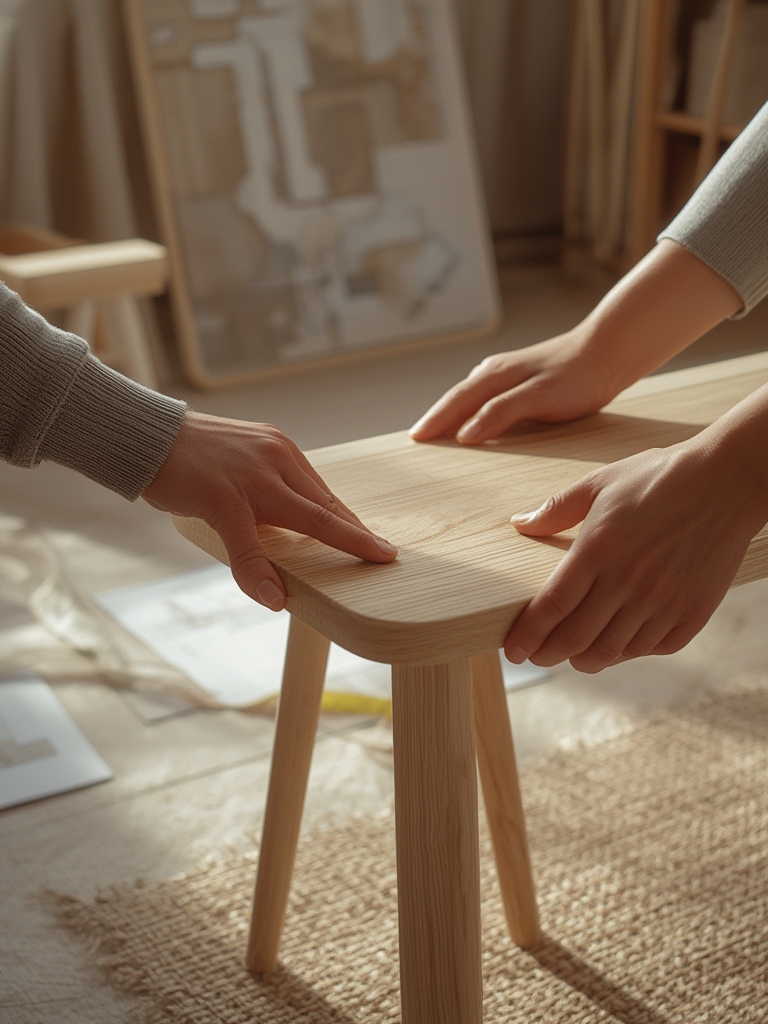
Don’t underestimate the learning curve. On forums, many express regret about rushing purchases, misjudging scale, or realizing too late that “Instagram-minimal” can veer cold and impractical. The wisdom: take it slow, focus on one or two core pieces, and adapt the vibe to your lifestyle.
- Trying to keep your modern living room open-plan, but struggling with privacy? See these proven kitchen divider ideas for multi-zone living.
The Missing Manual: Why Most Japandi Guides Fail on Practical Details
Most blog posts on Japandi minimalism home style stop short at “neutral colors, clean lines, natural materials.” When you actually need hard numbers—paint color codes, rug sizes for an 11×13’ living room, or where to buy a 65” media console under $900—details vanish. According to industry roundups and designers’ YouTube breakdowns, the top 3-5 search results rarely provide quantitative tips like ideal lighting levels for reading nooks or the best durable, non-toxic finishes.
A practical scenario: you love the look of a taupe wool rug, but guides neglect to mention pile depth or cleaning frequency. Or, you’re told to “add muted green accents,” but is that sage, moss, or olive? Without such specifics, new adopters end up mismatching tones or buying furniture that visually “floats” because it’s the wrong height.
Expert opinion: “The reason so many readers fail to finish their Japandi projects is the lack of detail. Guides need to get as granular as ‘Look for 87-91” sofas in warm oak with a 16-18” seat height, and match to wool or linen throws in hex #E8E3D3 or #B5B69A,’” says one Los Angeles-based interior designer who specializes in Northern-European fusion projects.
- Want that curated but lived-in feel? Learn how office cubicle makeovers are borrowing Japandi’s decluttering tricks to transform workspace style in 2025.
Cost, Materials, and Sustainability — How to Vet Modern Japandi Furniture in 2025
One of the most confusing aspects of modern Japandi furniture is pricing and material claims. Few retailers share certifications (like FSC or CARB), country-of-origin disclosures, or even basic warranty info upfront. Mid-range sofas can cost anywhere from $900 to over $2,500; coffee tables that look “artisan” online might arrive as mass-produced MDF with a veneer. Eco-credentials are often assumed (“natural bamboo!”) but rarely proven with third-party labeling or full specs. As Peakere urges, prioritize quality craftsmanship over the “Japandi” label alone.
In practice, you need a simple evaluation checklist:
- Ask for material specifics—solid vs veneer, actual wood species, and finish (oil, lacquer, VOC-free?)
- Request written details on warranties and expected lead times
- Look for clear sustainability statements, certifications, or at least manufacturing origin
- If you can’t get answers, move on—opacity signals mass production, not slow-made design
Some small brands (“semi-bespoke” shops on Etsy or at trade fairs) can provide exact dimensions, local sourcing info, or even custom sizing at a reasonable upcharge. Big-box deals rarely can. If budget matters, consider buying unfinished pine shelving and lime-washing for the look—just plan to reseal or touch up regularly.
- Exploring smart furniture for sustainability? See how AI-powered home assistant hubs are rethinking energy use in design-forward homes.
The Practical Side: Layout Rules and Small-Space Solutions for Japandi Minimalism Homes
There’s a lot of talk about “negative space” and “openness” in Japandi living room decor, but what does that mean in a 12×19’ living room or an apartment walk-up? While designers advocate for low-profile seating, space-saving storage, and floating shelves, actual numbers—sofa-to-wall clearance, rug sizing, lighting height—are rarely shared.
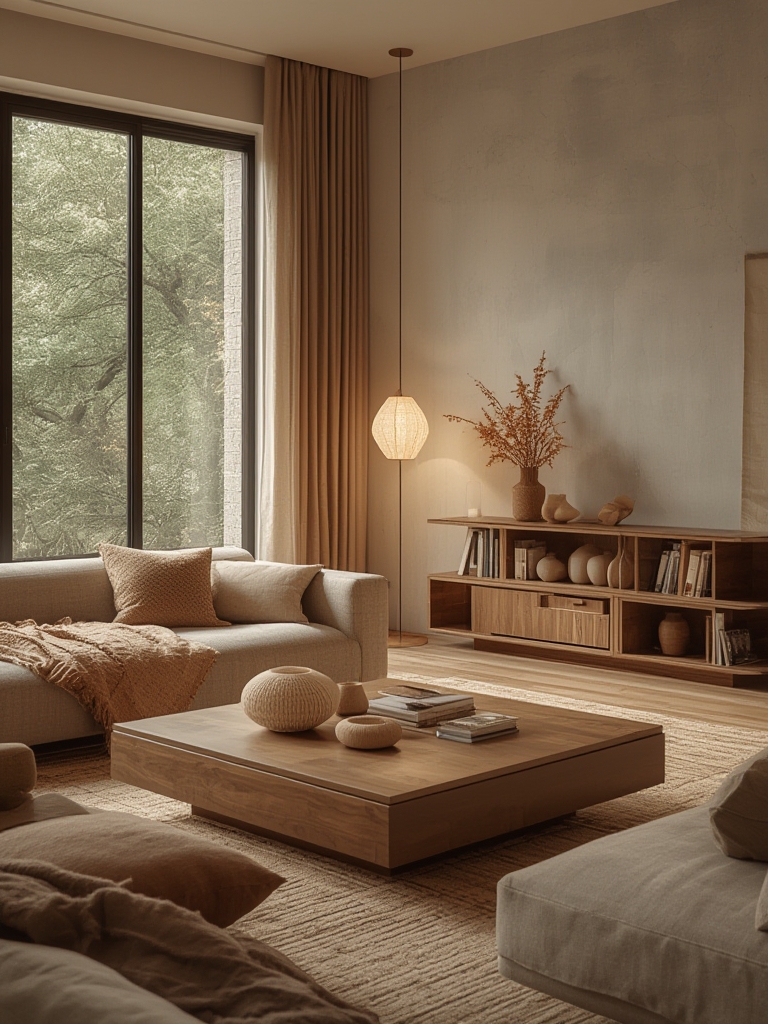
In small or awkwardly shaped rooms, prioritize the essentials: a 16-18” seat height sofa (under 90”), one or two multi-purpose ottomans (ideally with storage), and slim media units mounted or standing no more than 24” high. Rugs should extend 8-10” under main furniture legs. Use vertical elements sparingly: a tall indoor plant (think olive tree or bonsai) in the corner draws the eye up without clutter.
For renters, modular units—like stacking side tables or fold-down wall shelves—offer flexibility. Pay attention to circulation: leave at least 30” clearance zones for easy walking, and avoid oversizing coffee tables (36-40” length is usually ideal for compact rooms).
- Optimizing for compact living? Discover portable induction cooktops that embody Japandi principles in small apartment kitchens.
What’s Actually New for Japandi in 2025: Materials, Colors, and Craft
2025’s evolution of the Japandi style centers around deeper earth tones (terracotta, clay, muted sage and olive), mixed with off-whites and warm greys. Expect more imperfect, wabi-sabi-inspired ceramics and intentionally rough-hewn finishes—moving away from high-gloss for tactile matte textures. Handcrafted elements (think hand-thrown vases or visible joinery in tables) and upcycled woods are gaining ground, even though big retailers haven’t caught up with the trend. It’s about celebrating subtle flaws and honest craft as much as function.
According to Peakere and Homiodecor, key materials for the season include raw timber, rattan, natural bamboo, wool, stone, and tactile linen. Black or dark metal accents break up the space, while eco-conscious materials and hand-finished crafts trump status brands.
But the big change: function now matters as much as form. Pieces that combine storage, adaptability, or transformer features—like a nesting table set or hybrid work-lounge chair—fit Japandi’s philosophy. “Modern Japandi furniture has moved toward practical minimalism with a conscience,” notes one sustainable interiors consultant from New York City. “If it can’t adapt, it won’t trend.”
- For more on trending tactile tech-meets-decor, see our analysis of the aurora projector lamp boom for 2025 homes.
Buying Japandi Online: Surprising Barriers Nobody Warns You About
Shopping for Japandi style living room essentials online seems easy—until you hit reality. Most sites gloss over assembly complexity, unclear return policies, and the impossibility of “sampling” wood grains or fabrics before committing. Photos can look gorgeous, but may hide visible seams, color variation, or shortcuts in joinery. Few retailers publish comprehensive specs, and “lead times” for in-demand pieces can exceed 10 weeks—rarely stated upfront.
Consumers often discover these pitfalls only after checkout: delivery surprises, high return fees, or mismatching finishes. No consistent retailer policies exist to streamline this experience, though “timeless” and “budget-friendly” are touted in every ad. To safeguard yourself:
- Look for transparent lead times and shipping costs
- Insist on real photos (user-submitted, not just stylized product shots)
- Check for detailed assembly instructions and visible customer service contacts
- Use payment methods with buyer protection if policies are vague
And remember: if return fees are not openly advertised, they’re likely steep. In one reader’s story, a $1,200 sideboard “looked perfect online” but arrived with assembly taking three hours and finish so light it was trashed in a year by a single coffee spill. Research and confirm details before purchase.
- Interested in other major 2025 home gadgets? Our guide to laundry folding machines reveals the pain points behind viral organizing trends.
Frequently Asked Questions
How do I achieve Japandi living room decor on a budget?
Start by investing in one quality feature, like a solid wood coffee table or a linen accent chair, and use thrifted or DIY items for secondary pieces. Focus on neutral, earthy colors and natural textures to evoke the right look without splurging on every item.
What are the best paint colors for a Japandi style living room?
Soft whites, warm beiges, clay reds, muted greys, taupe, and moss greens work well. Look for paint codes offered by brands like Farrow & Ball or Behr—try “Drop Cloth” or “Mizzle” as proven neutrals for a calm atmosphere.
How do I balance minimalism with comfort in Japandi minimalism homes?
Prioritize functional minimalism: use low-slung, comfortable seating, natural fiber rugs, and mix warm throws or cushions with sparse styling. Add personal touches with handcrafted pottery or textured baskets to prevent the space from feeling cold.
What should I check before buying modern Japandi furniture online?
Ask for material details, clear warranty or return policies, full assembly instructions, and as many real (untouched) customer photos as possible. Confirm shipping costs and lead times to avoid surprise delays or extra fees.
Can Japandi living room decor work in small apartments?
Absolutely—choose compact, multi-functional furniture like ottomans with storage, slim-profile sofas, and wall-mounted shelves. Use negative space intentionally, avoid over-accessorizing, and add vertical interest (like a tall plant) to keep the room open yet cozy.